India Test Preparation Market Faces Edtech Consolidation

TL;DR
We see India’s test preparation market moving from broad funding-led expansion toward fewer, more scrutinised education businesses. Students and parents should compare current course support, price, access terms and outcomes carefully as consolidation, free online coaching and hybrid delivery reset what a paid programme must deliver.
India Test Preparation Market Faces Edtech Consolidation
India’s education-technology funding has become far more selective. Fresh sector data put funding at about $214 million in the first eight months of 2026, down from roughly $4.3 billion in 2021.
On 3 September 2026, fresh sector data showed Indian edtech funding had fallen from about $4.3 billion in 2021 to $214 million in the first eight months of 2026, while deal counts collapsed. For the India test preparation market, offers will increasingly be judged on outcomes, price and delivery, not growth claims.
We explain what has been confirmed, why exam-prep demand remains important, and what students, parents and institutes should watch before the next enrolment decision.
What Changed in the India Test Preparation Market
We read this as a reset in how education businesses are assessed, not as a disappearance of digital learning. Capital is flowing to fewer businesses, while buyers are asking harder questions about results, retention, support and sustainable delivery.
Fewer Funding Rounds, Higher Expectations
The number of funded edtech rounds fell from 368 in 2021 to 36 in the first eight months of 2026. Over the same period, the median round size reached $1.1 million in 2026, signalling that the businesses still attracting capital face a higher bar for proving their model.
Consolidation Is a Confirmed Signal
India’s competition regulator approved a share acquisition and merger between two education businesses on 7 July 2026. That CCI approval confirms consolidation is active, but it does not by itself prove that a student’s active course, faculty access or fee terms have changed.
Model-Led Means More Than a Funding Label
For us, model-led consolidation means that reach alone is less persuasive than a course’s operating reality. A programme needs to show how it supports preparation, manages live teaching, maintains doubt resolution, and explains what students receive for the full fee.

Why Exam Demand Still Supports Test Preparation
The need for preparation has not vanished simply because funding has cooled. High-stakes exams continue to bring large cohorts into the market, which is why we separate underlying learner demand from the performance of any one course provider.
Large Candidate Cohorts Create Persistent Demand
In 2025, 13,11,544 candidates registered for the first engineering-entrance session, with 12,58,136 appearing, according to NTA figures. Those volumes help explain why structured practice, revision plans and mentoring remain valuable to many aspirants.
Market Estimates Need Careful Reading
A disclosed estimate put government-exam preparation at ₹139 billion in FY2025, up from ₹75 billion in FY2020, with a projected ₹245 billion by FY2030. That market estimate covers one segment, so we would not use it as a shortcut for every exam category or learning format.
Hybrid Learning Has a Practical Appeal
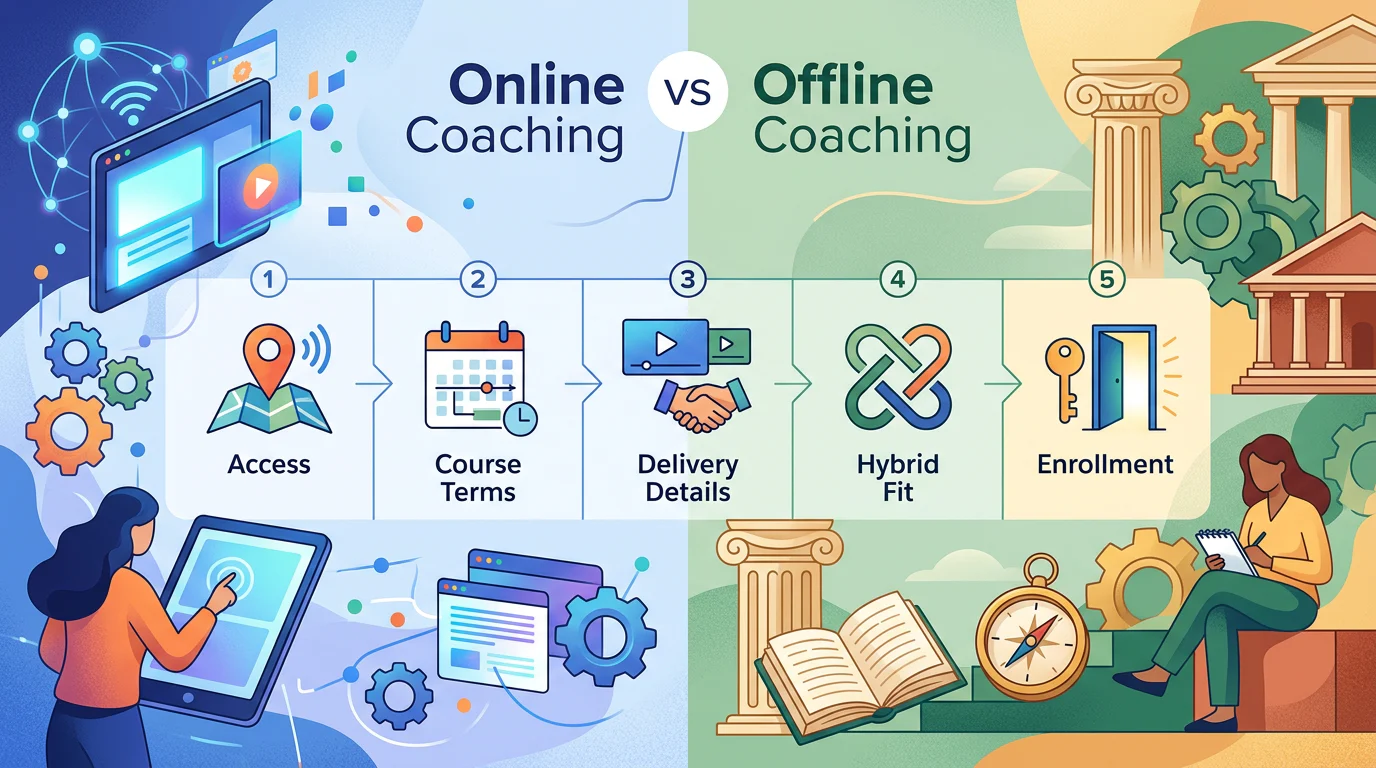
Online learning can make content easier to access, while classroom or local support can add routine and accountability. Students comparing formats can browse online coaching first, then decide whether live interaction, centre access or a self-paced schedule is genuinely worth the additional cost.
Free Coaching Raises the Value Test
The government’s August 2026 announcement of free online coaching for competitive-exam aspirants adds a new reference point for the market. It does not yet replace paid programmes, because national eligibility, course coverage, enrolment processes and delivery details still need to be assessed as they are published.
| What Is Confirmed | What It Means For Students | What We Recommend Checking |
|---|---|---|
| Free online coaching has been announced | More learners may gain access to foundational preparation | Eligibility, launch timing and exams included |
| Paid courses remain available | Price alone is a weaker reason to enrol | Live support, tests, mentoring and access duration |
| Consolidation is underway | Some services may be reorganised over time | Written notices, refund terms and course continuity |
A separate government-supported initiative already provides free online coaching to 5,000 eligible aspirants each year, including structured classes, tests and mentoring. The government announcement makes the immediate lesson clear: paid preparation must explain its added value rather than assume content access is enough.
We suggest comparing offline options through our Coaching Directory when routine, travel time and in-person doubt support are central to the decision.
What Students and Institutes Should Monitor Next
Students should monitor official scheme updates rather than social posts or broad promises. Before paying, we recommend saving the course page and confirming the exams covered, teacher availability, live-class schedule, mock-test access, refund rules and how long recordings remain available.
Institutes should treat transparent terms as part of their offering. The Digital Personal Data Protection Rules were notified in November 2025, with key provisions taking effect eighteen months later under the official privacy timetable. Clear consent, data-use explanations and support contacts matter when a programme collects student information.
- For Students: Compare the full learning experience, not a headline discount or a single claimed result.
- For Parents: Ask how doubts are handled, what happens if a timetable changes, and whether the programme suits the student’s actual study habits.
- For Institutes: Publish current course inclusions and evidence behind claims, then keep those details easy to verify.
We will keep connecting these shifts to practical preparation decisions in our Preparation Blog.
How Onlinecoaching4u Helps You Compare
At Online Coaching 4u, we think this is the moment to slow down before paying, not to rush into a familiar name. A changing market can produce better choices, but only if you compare the present offer rather than the story around it. We help students put current course details beside each other: exam coverage, teaching mode, live support, test access, city availability, fee terms, and published evidence behind claims. Start with the exam you actually plan to take, decide whether an online, classroom, or hybrid schedule fits your week, then record what is included before a discount expires. We also encourage parents to ask who handles doubts, how long recordings remain available, and what happens if a course schedule changes. That approach keeps the decision tied to learning needs and budget, which is exactly why we built Online Coaching 4u.
FAQs on India Test Preparation Market
Is the India Test Preparation Market Still Growing?
The market has large annual exam cohorts, but demand does not guarantee value from every paid course. We recommend comparing support, price, course duration and access.
What Does Consolidation Mean for Current Students?
Consolidation can change ownership or operations, but it does not automatically alter an active course. Check written notices, faculty access, support channels and refund terms.
Will Free Online Coaching Replace Paid Programmes?
Free coaching may broaden access to foundational resources, but implementation details still matter. Paid programmes must justify their cost with mentorship, tests, support and reliable access.