Use 10 Evidence Checks Before Choosing a Coaching Institute
A dated, written comparison record that shows which coaching option has evidence for the course you would actually join.
- Time
- Varies by shortlist
- Difficulty
- Moderate
- Cost
- No required spend
- Steps
- 10
Before you start, have
- A shortlist of coaching options
- The exact exam, stage and course type you need
- A notes document or comparison sheet
- Current course brochures, fee quotes or provider messages where available
- Current review samples and any advertised result claims
Heads up: Do not treat a verified listing as proof of teaching quality, current fees or future results.
Heads up: Do not pay on the basis of a verbal promise when the course, fee or refund terms can be recorded in writing.
Heads up: Do not treat a ranker count as a selection rate without course-specific enrolment context.
Updated 25 Sept 2026
In brief
Choose a coaching institute only after the exact course, current batch, full fee and exit terms are documented in writing. India’s CCPA guidance bars guaranteed-selection claims and requires important detail alongside advertised successful-candidate claims, so treat ratings and topper walls as leads to verify, not proof.
Define the exact course you need
Write the exam, preparation stage, delivery mode, expected access period and support you need. Compare only options that can answer the same course-level questions, rather than placing a test series beside a full teaching programme.
The step works when every option has one clearly named course or is marked unconfirmed.
Map the timetable and commute
Record each course’s teaching mode, class times, branch and your usual travel route. For online options, record whether the stated format is live, recorded or hybrid and how long access lasts.
The step works when the timetable and practical route are recorded beside every option.
Inspect the current teaching experience
Ask to observe a current class or inspect current teaching material in the subject where you need help. Note the lesson pace, the chance to ask doubts and whether the experience matches the delivery format you were offered.
The step works when your notes identify what you directly observed and what remains only a sales claim.
Confirm faculty and batch details in writing
Request the subject faculty, current batch assignment, student count, doubt process and test schedule in writing. The Ministry of Education’s coaching-centre guidance contemplates current disclosure of tutor qualifications, course duration, fees, student counts and outcomes, making these reasonable fields to request. Read the Ministry guidance
The step works when each field is evidenced or explicitly marked unconfirmed.
Price the full written offer
Request a written fee sheet for the exact course. List tuition, mandatory materials, tests, registration or other stated charges, scholarship terms and payment dates separately before comparing totals.
Use the coaching fee comparison calculator only after you have written figures, not estimates from a conversation.
Secure the exit and refund terms
Save the cancellation, exit and refund terms before payment. Record the deadline, deductions, treatment of materials and payment timing exactly as the provider states them.
This check matters because the Department of Consumer Affairs reported ₹1.56 crore in refunds secured for more than 600 aspirants and students by February 2025. Read the Department’s refund update The step works when you have a dated written policy, not a verbal assurance.
Read review provenance before the star score
Read recent review text for the same branch, course and study period. Check whether the reviewer describes a first-hand experience and look for incentive signals, repeated wording or an unusual burst of ratings.
Google Maps prohibits paid or incentivised reviews and selective requests for positive reviews. A 2020 Management Science study also found, across seven experiments, that rating-system design can influence overall ratings. Read Google’s review policy and use the coaching review evidence guide.
Test every result claim
For each advertised successful candidate, record the name, exam, year, rank, course, duration and whether the course was paid. Check the stated rank against the relevant official result source, then separate a confirmed result from proof that the named branch and course contributed to it.
The CCPA’s 2024 guidance prohibits false outcome claims and requires key details alongside successful-candidate advertising. Read the CCPA guidelines
Label unknowns instead of filling gaps
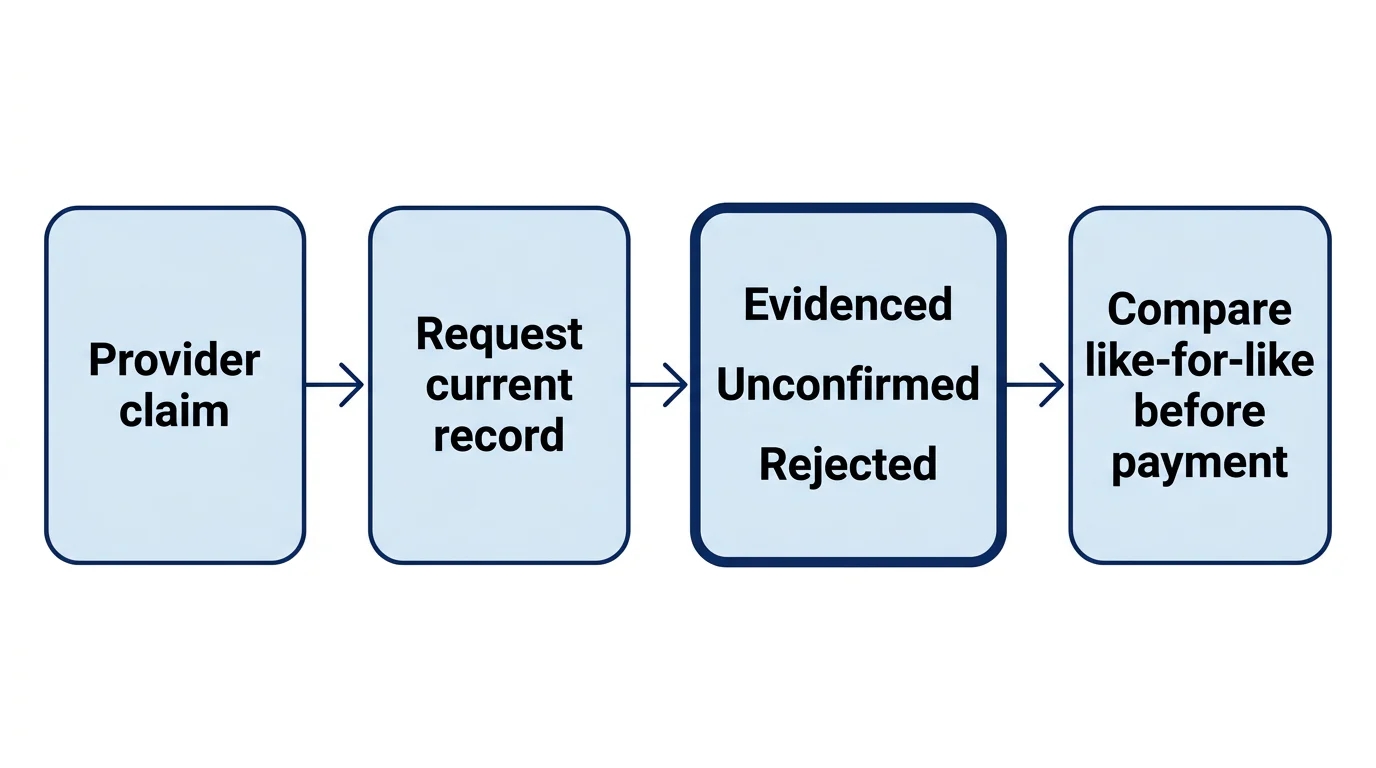
Mark every field as evidenced, unconfirmed or rejected. Do not convert an absent batch size, unclear faculty assignment or vague refund answer into a favourable assumption.
A listing confirmation is not a quality guarantee. Learn what a verified coaching institute means.
Choose the documented fit or keep researching
Choose only among options that meet your non-negotiable fields with current evidence. If an option cannot clarify the course, fee, refund terms, batch or result claim, keep it marked unconfirmed and continue researching rather than paying to resolve the uncertainty.
The step works when your selected option has a dated record for the same fields as every alternative.
You'll know it worked when
You have a dated comparison record for each shortlisted option, with the exact course, schedule, faculty, batch details, full written fee, refund terms, review context and result evidence marked as evidenced, unconfirmed or rejected.
Keep records, not impressions
A written record lets you compare the same course fields across options instead of comparing a brochure claim with a different programme. Keep the dated documents you receive with your shortlist, because a missing answer is different from a positive answer.
Turn a claim into a decision